
 Alice Turing
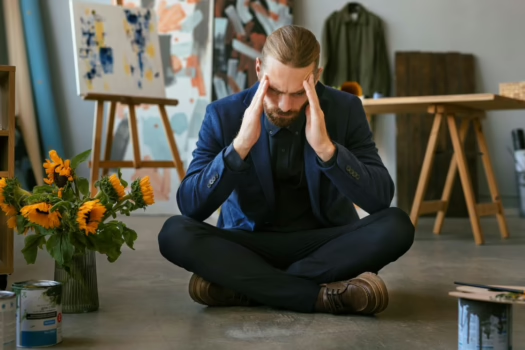
When you have to live with a chronic illness, neurodivergence, or a disability, it means you have to manage symptoms constantly. That’s when many people become experts in caring for themselves and finding ways to get through the day. When anxiety appears, whether it’s generalized or related to health issues, the boundary between “managing symptoms” and “self-medicating” becomes blurred. Here are three signs suggesting self-medicating may be doing more harm than good.
You’re Experiencing Dangerous Chemical Interactions
If you’re trying your own ways to manage anxiety and facing chemical interactions, know that you’re going a bit too far with your tricks. Many people self-medicate without looking into safety because they’re more concerned about getting a quick fix.
For instance, if you’re dealing with an issue that calls for consistent medication, adding alcohol or other OTC products to “calm down” may actually trigger reactions that can either mimic or exacerbate anxiety. Suppose you’re down with a cold or experiencing seasonal allergies. It’s natural to feel congested, miserable, and overwhelmed about getting this done in this situation. However, if you simply grab a decongestant, like Sudafed, to relieve nasal congestion and some wine to calm your nervous system, you’re doing it wrong.
You should first ask yourself, “Can you drink alcohol with Sudafed or any other decongestant?” The truth is that trying such combinations can aggravate your anxiety levels. Sudafed is a stimulant that constricts blood vessels. Alcohol is a depressant, and you’re putting your body into a chemical tug-of-war by mixing these two things. It’s not going to fix your anxiety; in fact, you’ll end up much worse off than you were before this “cure”.
You’re Experiencing a Rebound Effect
Yet another sign that self-medication is backfiring is waking up with “rebound” symptoms the next morning. This usually happens when you add alcohol in the equation, but it could occur with someone using various sedatives or stimulants as well.
When you use something to alleviate your anxiety, you’re likely going to pay the price tomorrow. For instance, alcohol temporarily boosts your dopamine and makes you feel calm, but it all changes when the chemical wears off, triggering your brain to drop the chemical levels lower than they were before. This is sometimes referred to as “hangxiety”. If you’re rolling out of bed with a plan to alleviate your stress, but you wake up feeling shaky, paranoid, or drained by fear, you need a better plan.
Your Baseline Stress Level is Going Up
A shift in your baseline is another subtle sign that self-medication isn’t working for you. A good treatment should return you to a normal functioning level. When you self-medicate ineffectively, it can actually drop your tolerance for stress.
This is what happens when you rely on external substances to help you deal with your feelings. Moreover, if you're taking stimulants, like pseudoephedrine, along with other depressants, you may end up facing sleep difficulty, which fuels anxiety and increases your risk of having a panic attack, especially when you’re a bit too tired to deal with anxiety triggers.
Endnote
If you notice any of these signs, try to cut yourself some slack. Living with health challenges is never easy, and it’s only natural to look for ways to feel better. However, you have to be mindful here and learn when it’s time to avoid self-medication and consult an expert to fix anxiety and depression.

Follow me down the rabbit hole!
I'm Alice and I live with a dizzying assortment of invisible disabilities, including ADHD and fibromyalgia. I write to raise awareness and end the stigma surrounding mental and chronic illnesses of all kinds.