 Alice Turing
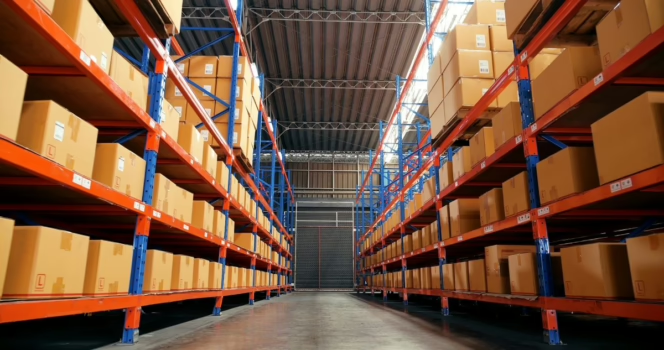
Creating an inclusive warehouse is a smart business move in a competitive labor market. Beyond simple compliance, making your facility accessible allows you to tap into a wider talent pool of skilled, dedicated workers.
Designing for accessibility can often improve safety and efficiency for your entire team. Here is how you can start making your warehouse more disability-friendly today.
Understand your responsibilities
The Americans with Disabilities Act (ADA) sets the standard for workplace accessibility. While industrial environments have unique challenges, the core goal remains the same: providing reasonable accommodations that allow all employees to perform their jobs effectively.
Being proactive about compliance does more than just reduce your legal risk. It signals to your staff and the community that your company values diversity and safety. You can find updated guidance on these standards through the ADA's technical assistance portal.
Optimize the physical layout
The physical flow of your warehouse is the first hurdle. Consider these high-impact changes:
- Aisle widths: Ensure aisles are wide enough for wheelchair users to turn comfortably (usually a 60-inch diameter for a full turn).
- Floor markings and lighting: Use high-contrast tape to mark pathways and hazards. Consistency will help workers with visual impairments or sensory sensitivities navigate safely.
- Clear signage: Use large fonts and Braille on permanent signs, such as those for restrooms, exits, and safety stations.
Small adjustments, like installing ramps with a gentle slope or adding tactile warning strips near loading docks, make the environment safer for everyone and reduce the risk of trips and falls.
Upgrade equipment and controls
Your machinery should be as intuitive as possible. The location of control panels is critical for employees with limited reach or mobility. Controls should be mounted at a height that is accessible from both a standing and seated position.
Safety is also a major factor in accessibility. You want your equipment to behave predictably. For instance, when you are maintaining or upgrading your conveyor systems, installing a precision-engineered industrial limit switch ensures that machinery stops exactly at a predetermined point. This provides a vital fail-safe for operators with mobility or sensory impairments who may need more time to react to moving parts.
Foster an inclusive culture
Hardware and layouts are only half the battle. Perhaps your biggest challenge is embedding these values in your people.
- Staff training: Train your managers on how to discuss accommodations respectfully.
- Regular audits: Walk the floor with your employees. They are the best people to identify “hidden” barriers, such as a heavy door that is difficult to open or a piece of software that isn't compatible with screen readers.
- Flexible policies: Sometimes, the best accommodation is a flexible schedule or a modified workstation.
For more resources on building an inclusive workforce, check this guide from the Office of Disability Employment Policy.
A well-optimised warehouse is a successful one. So taking the time to ensure this for every single member of your workforce can only benefit them and your organization at large.

Follow me down the rabbit hole!
I'm Alice and I live with a dizzying assortment of invisible disabilities, including ADHD and fibromyalgia. I write to raise awareness and end the stigma surrounding mental and chronic illnesses of all kinds.