
 Alice Turing
A treatment plan can look flawless in a clinic when the dosing schedule is logical, the medication is evidence-based, and the instructions are clear and printed on a tidy handout. But then the patient gets home, and real life starts asking questions the appointment never did.
- Can this actually be taken at the same time every day given an unpredictable work schedule?
- Is there a quiet, accessible place to prepare an injection, or a private space to manage a symptom flare?
- Does fine motor control make a particular device genuinely usable, or just theoretically usable?
These aren’t edge cases. They’re the ordinary texture of daily life for a huge number of patients, especially those managing disability, chronic illness, or simply a life that doesn’t match the tidy assumptions built into most treatment plans. A plan that doesn’t account for any of this isn’t really a complete plan. It’s only half.
Why “Medically Appropriate” Isn’t the Same as “Workable”
The same principle applies to injectable hormone treatment. Even when products such as Medzone HGH injections are being considered as part of medically indicated care, the treatment plan has to account for the patient’s ability to store, administer, and monitor the medication safely. This distinction, between a treatment being clinically appropriate and a treatment actually being usable by the person receiving it, gets surprisingly little attention in how care is typically discussed. A provider can correctly identify the right medication and still hand a patient something that quietly sets them up to fail, simply because nobody asked the practical questions that determine whether the plan will actually get followed.
The Gap Between Prescribing and Living With a Prescription
This gap shows up constantly in chronic disease management generally, not just with injectable medications. Roughly half of people with chronic conditions stop taking their prescribed medication within a year, and the reasons rarely come down to the medication simply not working. According to the CDC, barriers to medication adherence include cost, difficulty understanding why the medication matters, side effects, and practical challenges in actually following the regimen as prescribed. That list is telling. Most of what derails a treatment plan isn’t medical – It’s logistical, financial, or physical, and all of those categories hit disabled patients and patients managing complex daily routines disproportionately hard.
What Storage and Administration Actually Require
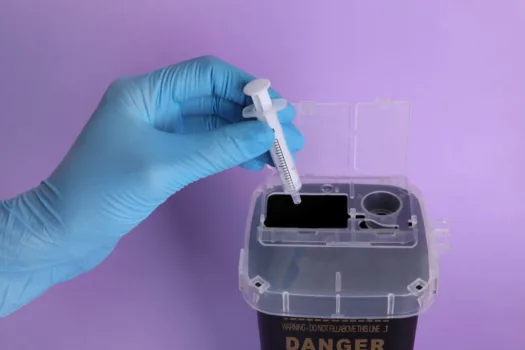
Injectable medications can also create practical demands that are easy to overlook from a clinical perspective. Depending on the medication and delivery system, patients may need to manage supplies, follow specific storage instructions, handle needles or injection devices, and dispose of used sharps safely. The FDA guidance on sharps used at home emphasizes that used needles should be placed immediately in an appropriate sharps container and handled in a way that protects patients, family members, and others from accidental injury. For someone dealing with limited dexterity, unstable housing, limited storage space, or a complex daily routine, these practical requirements can become an important part of whether a treatment plan is actually manageable.
Why This Gets Overlooked So Often
Part of why this disconnect persists is structural. A typical appointment is built around diagnosis and prescription, not around a detailed walkthrough of a patient’s actual daily environment. Providers are rarely trained to ask about things like grip strength, housing stability, or caregiver availability, even though all of them directly determine whether a plan will work outside the clinic. Patients, for their part, often don’t volunteer this information either, sometimes out of embarrassment, sometimes simply because nobody asked, and sometimes because they don’t yet know themselves whether a plan will be workable until they’ve tried and failed to follow it.
Time pressure compounds all of this. A standard appointment slot rarely leaves room for a thorough conversation about daily logistics on top of diagnosis, explanation, and the clinical decision-making a visit is built around. The practical questions that would catch a mismatch between a plan and a patient’s actual life often get pushed to a rushed final minute, if they come up at all, which means they’re the first thing to get skipped when a visit runs long.
What a More Realistic Conversation Looks Like
Closing this gap doesn’t require an entirely different model of care. It requires a few additional, very practical questions folded into the existing conversation. Where will this medication actually be stored, and does that environment support it? Who, if anyone, will be administering it, and does that person have the physical capacity and training to do so safely? What happens if a dose is missed because of a bad day, a flare-up, or an access barrier that had nothing to do with willingness to follow the plan? Providers who ask these questions upfront tend to catch problems before they derail treatment, rather than discovering them months later when a patient has quietly stopped following a plan that was never actually workable for their life.
Why This Matters Most for Patients Managing Disability
These gaps hit hardest for patients already managing disability or chronic illness, precisely the population for whom a workable plan matters most. A treatment that assumes stable fine motor control, predictable daily routines, or easy access to private, climate-controlled storage isn’t neutral. It quietly excludes patients whose lives don’t match those assumptions, and it does so without ever being named as a barrier. Building accessibility into treatment planning from the start, rather than treating it as an afterthought when a plan has already failed, respects both the complexity of patients’ lives and the actual goal of treatment, which is adherence that produces results, not a prescription that looks correct on paper.
The Bottom Line
A treatment plan that doesn’t survive contact with daily life isn’t a complete plan, no matter how medically sound it is in theory. Real adherence depends on honest conversations about storage, administration, support, and the everyday realities a clinic visit rarely has time to cover. Building those conversations into care from the beginning, rather than treating non-adherence as a patient failing the plan, tends to produce outcomes that actually hold up once the appointment ends and daily life resumes.

Follow me down the rabbit hole!
I'm Alice and I live with a dizzying assortment of invisible disabilities, including ADHD and fibromyalgia. I write to raise awareness and end the stigma surrounding mental and chronic illnesses of all kinds.