 Alice Turing
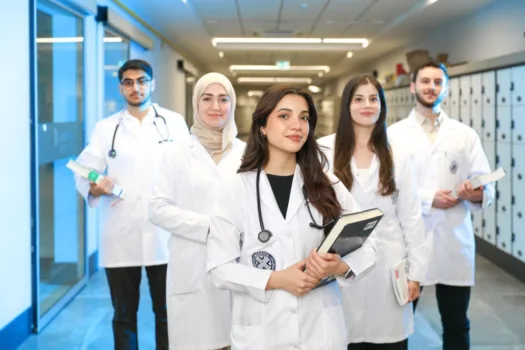
If you’re thinking about medical education, you’re stepping into a field that looks very different from what it did even five years ago. Training used to revolve around textbooks, lectures, and long clinical hours alone. Now, data systems, digital tools, and AI are becoming part of the learning process too. If you want a career in healthcare, it helps to understand how education is shifting and what those changes could mean for your future.
AI Is No Longer a Side Topic in Medical Training
You’ve probably seen AI pop up in everything from chatbots to photo editing. In healthcare, it’s becoming much more serious. Medical students and healthcare professionals now need to understand how algorithms assist with diagnostics, patient monitoring, workflow planning, and record management.
That doesn’t mean robots are taking over the hospital floor in some dramatic sci-fi plot twist. It means future clinicians need enough technical literacy to work with AI tools safely and responsibly. A radiologist may use AI to flag suspicious scans. A nurse leader may rely on predictive software to track patient deterioration. A health administrator may need to judge whether an automated system is helping or creating new problems.
Health Informatics Is Becoming a Core Skill
You can’t really talk about modern medical education without bringing up health informatics. It sounds technical, and it is, but the basic idea is simple: using data, software, and systems to improve patient care.
Electronic health records are one obvious example. They’re now central to almost every healthcare setting, yet many students discover that clicking through them efficiently is practically a skill of its own. Beyond records, informatics includes decision support tools, telehealth platforms, patient portals, and systems that track quality outcomes.
An AI in Healthcare Masters program reflects how valuable this hybrid knowledge has become. If you can understand both healthcare operations and intelligent systems, you’re in a strong position. Employers want people who can bridge the gap between clinical reality and technical design without making either side want to throw a keyboard.
Students Need More Than Clinical Knowledge
If you’re preparing for a healthcare career, strong science grades still matter. Anatomy, physiology, pathology, and pharmacology are not going anywhere. What’s changing is the list of skills that sit beside them.
Medical education now rewards adaptability, digital literacy, and systems thinking. You may need to interpret dashboards, assess the quality of automated recommendations, or spot bias in a dataset. Those tasks weren’t standard expectations for most healthcare students a generation ago.
Communication also matters more than people expect. Imagine explaining to a patient how an AI-assisted screening tool works without making it sound mysterious or scary. Or picture working with IT teams who understand code better than bedside care.
Ethical Questions Are Now Part of the Curriculum
Technology in healthcare can be impressive, but it also raises hard questions. Medical education has to prepare you for those questions, not just the shiny tools.
For example, what happens if an AI model performs well for one population but poorly for another? What if patient data is used in ways people didn’t fully understand? What if clinicians trust software too much and stop questioning flawed outputs? Those are not abstract classroom debates. They affect real diagnoses, treatment plans, and patient trust.
A strong educational program should help you think through issues like:
- data privacy and security
- algorithmic bias
- informed consent in digital care
- accountability when technology fails
- fairness in access to advanced tools
Flexible Learning Paths Are Expanding Access
One major shift in medical education is how people access it. You’re no longer limited to one narrow route with rigid timing. Many students now combine online learning, hybrid coursework, certificate programs, and graduate study while working or managing family responsibilities.
That flexibility matters in healthcare, where many people enter the field through nontraditional paths. A working nurse may want training in informatics. A public health professional may want to move into digital health strategy. A clinician may want leadership roles connected to technology implementation.
Career Opportunities Are Broadening Beyond Traditional Roles
When people hear “medical education,” they often picture doctors and nurses only. Those roles remain central, but the career map is getting wider. If you’re interested in healthcare and technology, there are now more ways to build a meaningful career that supports patient care indirectly as well as directly.
You might work in:
- clinical informatics
- healthcare data analysis
- digital health operations
- electronic records optimization
- AI implementation in hospital systems
- healthcare quality improvement
What You Should Look for in a Modern Program
If you’re evaluating medical or healthcare-related education now, you should look beyond prestige and course names. A modern program needs to match the reality of today’s healthcare environment.
Start with the curriculum. Does it include informatics, data use, ethics, and practical technology applications? Check whether faculty members have real experience in healthcare systems, not just academic credentials. Look for opportunities to work on actual case studies, interdisciplinary projects, or applied research.
It also helps to ask practical questions:
- Will this program prepare you for current industry tools?
- Does it connect healthcare knowledge with digital systems?
- Are there networking or internship opportunities?
- Can it support the kind of role you actually want?
Medical Education Is Becoming More Connected to the Real World
The old model of learning everything in theory first and figuring out the messier details later does not hold up well anymore. Healthcare moves too fast, and technology changes too quickly.
Medical education is becoming more practical, more interdisciplinary, and more connected to real workplace demands. That’s a good thing for students who want training that feels relevant rather than dusty. It also means expectations are higher. You’re not just learning facts. You’re learning how to use information, question technology, protect patients, and adapt when the system changes.
If you’re planning your next step, pay attention to programs that reflect where healthcare is headed, not where it used to be. The future of medicine won’t be built by clinical knowledge alone. It will be shaped by people who can combine care, data, ethics, and judgment with real skill

Follow me down the rabbit hole!
I'm Alice and I live with a dizzying assortment of invisible disabilities, including ADHD and fibromyalgia. I write to raise awareness and end the stigma surrounding mental and chronic illnesses of all kinds.