
 Alice Turing
If you have osteoarthritis in your hips or knees, you probably started with over-the-counter painkillers and figured that would be enough. For a while, maybe it was. But at some point, the dose that used to get you through the day stops working, or your stomach starts complaining, or you just get sick of adding another pill to the lineup. You’re not imagining it. The limitations of long-term painkiller use for osteoarthritis are real, and so are your other options. This is a practical look at what else actually works.
Why Long-Term Painkillers Become a Problem
NSAIDs like ibuprofen (Advil, Motrin) and naproxen (Aleve) are effective at reducing inflammation. That’s not in dispute. The problem is what happens when you take them for months or years. Gastrointestinal bleeding, kidney damage, and increased cardiovascular risk all show up in the research on prolonged NSAID use. A 2019 guideline from the American College of Rheumatology recommends topical NSAIDs over oral ones for knee OA specifically because of these risks.
Acetaminophen (Tylenol) is gentler on the stomach but barely outperforms placebo for osteoarthritis pain in recent studies. And opioids, while sometimes prescribed for severe cases, bring their own well-documented issues with dependence and diminishing returns.
None of this means you should quit your medications cold turkey. It means there’s a strong case for building a pain management plan that doesn’t rely on pills as the only tool in the box.
Movement That Doesn’t Make Things Worse
Exercise is the single most consistently recommended non-drug treatment for osteoarthritis. The CDC, the Arthritis Foundation, and the American College of Rheumatology all agree on this. But telling someone with a painful hip to “stay active” without specifics is about as useful as telling them to “feel better.”
What works: low-impact movement that strengthens the muscles around the affected joint without grinding bone on bone. Swimming and water aerobics are at the top of the list because buoyancy takes roughly 90% of your body weight off your joints. Cycling (stationary or outdoor) keeps the hip moving through its range of motion with minimal load. Walking counts too, especially on flat, even surfaces with supportive shoes.
What to avoid: high-impact activities like running on pavement, jumping, or deep squats if they flare your symptoms. The goal is consistency, not intensity. Twenty minutes of walking five days a week does more for osteoarthritis pain over time than one aggressive workout followed by three days on the couch.
Strength training matters, too. Weak quadriceps are one of the strongest predictors of disability in people with knee OA. For hip OA, the gluteus medius (the muscle on the side of your hip) tends to weaken and stop stabilizing the joint properly. A physical therapist can test which muscles need work and give you a targeted routine. Even bodyweight exercises like clamshells and glute bridges, done consistently, can change how your hip feels during daily activities.
Does the Low-Tech Stuff Actually Work?
Some of the cheapest interventions are also some of the most underrated. Heat therapy relaxes tight muscles around an arthritic joint and can make morning stiffness shorter. A 15-minute session with a heating pad or a warm bath before you start your day gives the joint a chance to loosen up. Paraffin wax baths work well for arthritic hands.
Cold therapy is better for acute flare-ups and swelling. A gel ice pack wrapped in a towel, applied for 15 minutes at a time, can bring down inflammation after you’ve overdone it on a busy day.
Assistive devices are worth mentioning because a lot of people resist them longer than they should. A cane used in the opposite hand from your painful hip reduces the load on that joint by up to 60%. Shoe inserts (orthotics) can correct alignment issues that put extra stress on arthritic joints. Raised toilet seats, grab bars, and jar openers aren’t glamorous, but they reduce pain at the exact moments when you’re most vulnerable to it.
What About Supplements and Other Complementary Therapies?
Your primary care doctor may not bring these up, but the options beyond medication have grown significantly.
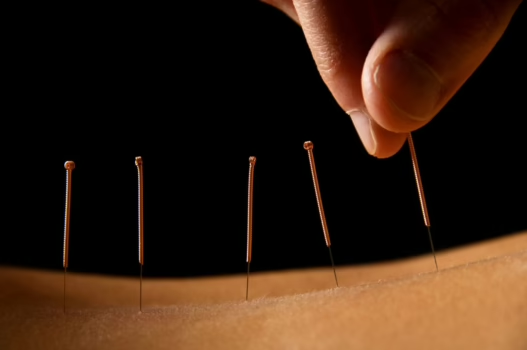
Acupuncture has the strongest evidence base among complementary therapies for osteoarthritis. A Cochrane review found that it produced clinically meaningful improvements in pain and function for knee OA. For hip OA, the research is smaller but promising. The treatment triggers your body’s own endorphin production and reduces pro-inflammatory compounds at the joint. It also increases local blood flow, which means damaged tissue gets more oxygen and nutrients to work with. On top of the joint itself, people with hip osteoarthritis who try acupuncture often notice improvements in the secondary muscle pain that builds up from compensating for a stiff hip over months or years.
Tai chi has solid research behind it for both knee and hip osteoarthritis. A 12-week tai chi program was shown to be as effective as physical therapy for knee OA pain in a 2016 study published in the Annals of Internal Medicine. It improves balance too, which matters because falls are a real risk when your joints are unstable.
Massage therapy can temporarily reduce pain and stiffness, though the effects tend to be shorter-lived than exercise or acupuncture. It works best as part of a broader routine rather than a standalone treatment.
Supplements are a mixed bag. Glucosamine and chondroitin get the most attention, but the evidence is split. The GAIT trial (a large NIH-funded study) found that the combination helped a subgroup of patients with moderate-to-severe pain, but not the overall study population. Turmeric (specifically its active compound curcumin) has shown anti-inflammatory effects in some smaller trials, though absorption is poor without a piperine (black pepper extract) additive. Talk to your doctor before starting either one, especially if you’re on blood thinners.
Small Changes at Home That Compound Over Time
Weight loss deserves its own mention because the math is hard to argue with. Every pound of body weight translates to roughly four pounds of pressure on the knee joint. Losing even 10 pounds takes 40 pounds of force off your knees with every step. For hip OA, the effect is similar. You don’t need to hit an ideal BMI. Even a 5% reduction in body weight has been shown to produce measurable symptom improvement.
Sleep is the other underrated factor. Osteoarthritis pain disrupts sleep, and poor sleep makes pain worse the next day. It’s a feedback loop. A firm mattress, a pillow between the knees (for side sleepers with hip OA), and a consistent bedtime routine can interrupt that cycle. If pain regularly wakes you up, that’s worth bringing up with your doctor, because unmanaged nighttime pain erodes your ability to do everything else on this list.
Diet won’t cure osteoarthritis, but a pattern of eating that reduces systemic inflammation may help at the margins. The Mediterranean diet (heavy on fish, olive oil, vegetables, nuts, and whole grains) has the most evidence here. Processed foods, refined sugar, and excess alcohol tend to increase inflammatory markers.
Rethinking Your Approach
The biggest shift in osteoarthritis management over the past decade has been away from “take this pill” and toward building a multi-layered plan. Pills might still be part of it. But layering in regular movement, complementary therapies, assistive devices, and lifestyle adjustments gives you more ways to keep pain from running your schedule. If your current approach isn’t working well enough, pick one thing from this list you haven’t tried yet and give it a real shot for four to six weeks. That’s usually long enough to know whether it’s making a difference.
‘

Follow me down the rabbit hole!
I'm Alice and I live with a dizzying assortment of invisible disabilities, including ADHD and fibromyalgia. I write to raise awareness and end the stigma surrounding mental and chronic illnesses of all kinds.