 Alice Turing
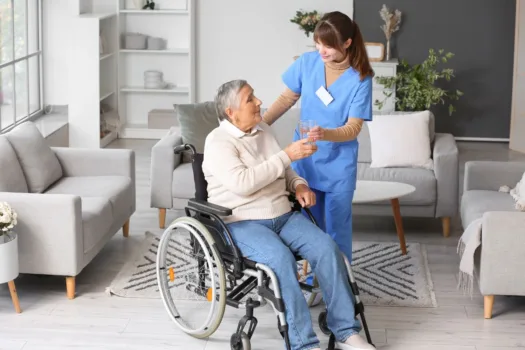
Caregiving changes the way you see people.
There are so many differences between helping to care for a loved one and being a nurse, but a large part of both is observing changes in people. I have often noticed changes in my mom’s behavior or symptoms and then later found out that her doctors had also observed the same things. For example, my mom’s trouble with her balance made it hard for her to walk and caused her to fall on several occasions. I had noticed that she was having trouble a while before her doctors did, but by the time they did, they were able to observe it for themselves and write it down in her chart. This shows that there are definitely some similarities between the two, but there are also many differences.
Some people’s experiences as family caregivers can lead them to realize that they are suited to a career in nursing after they have completed their family caregiving responsibilities.
Many people who have been family caregivers for a loved one have found new skills. For some, they have found that they are calm in a stressful situation, while others have found that they really enjoy advocating for someone with needs, learning about different medical conditions and their treatment, or just learning how to explain a lot of complicated medical information to someone who is trying their best to understand what is going on with their body.
These are also qualities that matter in nursing.
How Caregiving Experience Can Inspire a Career in Nursing
He noted that many people start out as family caregivers without any prior knowledge or training. But they learn as they go along in order to take care of their loved ones. In the process, they learn a great deal about their family member’s illness or condition and how to manage their care.
There are many different experiences and insights that a caregiver gains while giving care to a loved one. But one of the biggest insights a family caregiver gains is a close-up view of the healthcare system. By giving care to a loved one, a family caregiver finds out what works and what does not work within the healthcare system. The family caregiver finds out how confusing the discharge instructions can be from the hospital after an operation. The family caregiver finds out how scary the medical terminology is within the healthcare system. But the family caregiver also finds out how very important it is to take that extra minute or two to really listen to a patient’s and their family’s needs and concerns.
For individuals who have completed a bachelor’s degree in another field, their interest in healthcare and nursing can lead to exploration of ways to enter the field of nursing. Some individuals may look into traditional nursing programs, associate degree nursing programs, or even accelerated nursing programs in Texas that offer an accelerated Bachelor of Science in Nursing (ABSN) degree. While researching these options, it is essential to take into consideration the required prerequisites for the program, the clinical requirements, the structure of the program, and the level of support that the student will receive while in the program. Finding a program that fits the individual’s lifestyle and responsibilities is also very important.
This combination of lived experience and education is powerful.
The Skills Caregivers Bring With Them
For people with experience as caregivers, certain skills that they have acquired can be useful in their future roles as nurses. An important skill to note is that of observation. Many family members and patients alike can report changes in themselves or their loved ones, such as a change in mood, decrease in appetite, decrease in mobility, and so on. A nurse must be able to observe patients for even the smallest of changes that may alert the nurse to a potential problem that could affect the patient’s health if not treated.
Communication with others, including family, patients, and healthcare providers, is another quality that nurses possess. Caregivers are also able to understand and communicate with many different individuals, such as doctors and nurses, and are able to understand different plans of care and how to follow through with them.
Your lived experience can bring a lot of positive qualities to the nursing profession. For example, as a nurse, you can bring a lot of compassion to your patients and develop a deeper understanding of their fears and worries. As a nurse, you can also bring a lot of knowledge to your patients and their families and be able to better support them through their illness.
Caregiving and Nursing Are Not the Same
Although a person’s experience as a caregiver for a loved one can inspire them to become a nurse, it is important to understand that there is a significant difference between the two professions.
However, there is a very important distinction between family caregiving and nursing. While the inspiration to pursue a career in nursing can come from personal and family experiences as a caregiver, nursing is a personal and professional endeavor. The role of a nurse is that of a health care professional, and thus the scope of practice for a nurse is vastly different from that of a family caregiver. A family caregiver typically provides support and care to one individual for an extended period of time (e.g. months and/or years), whereas a nurse typically provides care to many patients within a variety of health care settings who have a range of different needs. As a health care professional, the nurse practices within the boundaries of established clinical standards of care, maintains accurate documentation of care provided, administers medications in a safe and legal manner, has a working knowledge of human body systems, manages a variety of situations including emergencies, and functions within a variety of health care teams.
Questions Caregivers Should Ask Before Pursuing Nursing
Before entering a nursing program, caregivers have to carefully consider their motives, their commitments, and the support available to them.
A further question to ask yourself is why you want to become a nurse. You may have heard of good nursing care from someone who is a nurse or had poor care from someone who is not. Your motivation for becoming a nurse could be because of a positive experience with nursing care or your frustration with the lack of good care that has been given to a loved one in the past. The motivation for becoming a nurse is very important to understand because of the demands that the work of a nurse can place on a person.
Caregivers should consider the type of health care setting that best fits their interests. Will you be a hospital nurse or a community health nurse, rehabilitation nurse, pediatric nurse, home health nurse, mental health nurse, hospice nurse, or patient and family education nurse?
Lived Experience Can Make Healthcare More Human
Healthcare needs professionals who understand that patients are people first. Caregivers of persons with disabilities, or who are ill, aged, or recovering from an injury or illness, can bring this vital understanding to the health care system. They understand the fears, needs, and concerns of individuals and their families and can use this knowledge to support nurses and other healthcare providers in delivering quality of care.
Because family members and patients are forgetful because they are scared or trying to make the best decision for their loved one. That patients need to have accessible care. That patients need to have care that keeps their dignity. That patients need respect in their care.
Caregiving by itself is not the same as being a nurse. It is not the same as going to nursing school, becoming licensed, and starting to work as a nurse. But the experiences of a family caregiver can be the very beginning of someone’s calling to a career as a nurse. It can give a person the inspiration and the heart for health care and the desire to serve others as a nurse.
The experience one has to start somewhere, and for many, the start is at home with the care of a loved one.

Follow me down the rabbit hole!
I'm Alice and I live with a dizzying assortment of invisible disabilities, including ADHD and fibromyalgia. I write to raise awareness and end the stigma surrounding mental and chronic illnesses of all kinds.