 Alice Turing
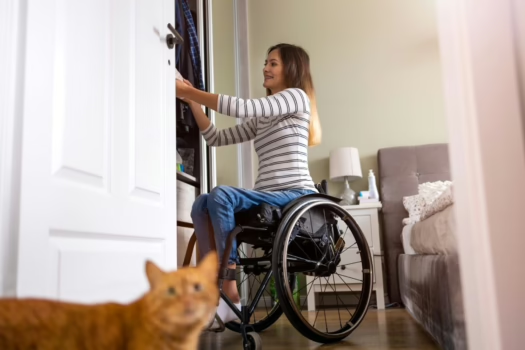
For the many people living in the UK with physical disabilities, everyday spaces can either work with them or against them. Life can be challenging enough without having to navigate an unsafe or awkward home, especially when you are trying to relax and enjoy your property.
Thoughtfully designed spaces with made-to-measure furniture can transform a home into a place that works with the occupier rather than against them.
Built around individual needs
One of the best things about custom design is being able to tailor every detail to your individual needs. Simple adjustments such as surface height or light switch placement can make a world of difference.
If you are looking at redesigning your home, think about things that are a struggle for you. Make a list and confer with a builder to see what is possible within the limitations of your home. When buying furniture, test out whether the height or depth works for you before you commit to a purchase.
Function without compromise
In the past, options for accessibility have often been clinical and feel hospital-grade. Now, bespoke furniture seamlessly blends functionality with style.
With most bespoke furniture companies, the style and design are completely customizable. You can opt for different wood grains, paint colours, styles and finer details. However you want your home to look, the options are there.
Improved flow and safety
Sometimes, items in homes can be a safety hazard if they do not work properly for their user. For someone who uses a wheelchair or other mobility aids, obstructions and tight corners are incredibly unhelpful.
Switching to sliding wardrobes instead of traditional hinged door units can prevent collisions and free up space for wheelchairs and walkers. It would also allow a seamless transition between rooms, making it easier to live your life as you choose.
Rearranging rooms may also be helpful for accessibility. Rooms that work with your daily routine make life so much easier. For example, changing the contents of your kitchen cupboards can make getting meals prepared a lot easier. Putting crockery in a lower-down unit makes it easy to grab if you fancy a snack.
Supporting independence
When furniture fits the person rather than the other way around, it encourages confidence and autonomy in daily life. Being able to do more independently can improve your mental and physical health.
Being independent allows a sense of responsibility and pride, especially if there are areas where you do need extra support.

Follow me down the rabbit hole!
I'm Alice and I live with a dizzying assortment of invisible disabilities, including ADHD and fibromyalgia. I write to raise awareness and end the stigma surrounding mental and chronic illnesses of all kinds.