 Alice Turing
While most people view home renovations through the lens of pure aesthetics, a thoughtful designer prioritises how a space feels and functions during every stage of adulthood. You deserve a beautiful environment that supports your independence and eliminates the frustration often caused by narrow layouts or slippery surfaces. Blending smart technology with ergonomic planning allows you to transform this vital room into a safe, stylish retreat.
Understanding Accessibility Needs and Future-Proofing Your Home
Independence starts with a design that respects your changing physical requirements.
While some homeowners need immediate support for reduced mobility, others simply want to future-proof their properties to avoid disruptive renovations in the following decade.
You should prioritise universal design principles and focus on inclusive usability for guests and residents alike. When you invest in these changes now, you maintain the value of your home and ensure your environment remains a supportive haven for years to come.
Layout, Space Planning, and Compliance
Spatial planning dictates how easily you can navigate the room during your morning routine. You must provide a clear turning circle to accommodate a wheelchair or a walking frame without catching your knuckles on the walls.
Widening the doorway ensures easy entry, while step-free flooring eliminates the risk of tripping on a raised threshold. When you position your sanitaryware, leave enough lateral space next to the toilet so that you can transfer safely from a mobility aid.
Adhering to these generous clearances prevents common household accidents and makes daily movement feel effortless.
Choosing Fixtures: Safety, Comfort, and Modern Design
Modern fixtures bridge the gap between clinical safety and high-end style.
You can install comfort-height WCs, which sit higher than standard toilets to reduce the strain on your knees and hip joints. Thermostatic mixing valves protect your skin by maintaining a constant water temperature, while lever-operated taps allow you to control the flow with minimal grip strength.
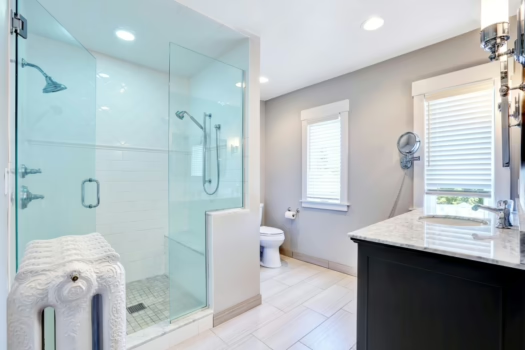
Many homeowners now choose walk-in showers with low-profile trays to create a seamless, open-plan look that feels both luxurious and accessible. Select slip-resistant tiles with a high R-rating to provide essential traction underfoot without sacrificing a contemporary aesthetic. Use a shower chair for added safety.
Funding, Grants, and Professional Support
Financial planning and professional expertise simplify the renovation process significantly. If you live in England, Wales, or Northern Ireland, you may qualify for a Disabled Facilities Grant through your local council to help cover the costs of these vital adaptations.
You should contact an occupational therapist early in the project to assess your specific physical needs and ensure the layout works for your unique range of motion. Engaging a specialist designer helps you navigate complex building regulations while you select high-quality materials that suit your personal taste.

Follow me down the rabbit hole!
I'm Alice and I live with a dizzying assortment of invisible disabilities, including ADHD and fibromyalgia. I write to raise awareness and end the stigma surrounding mental and chronic illnesses of all kinds.