
 Alice Turing
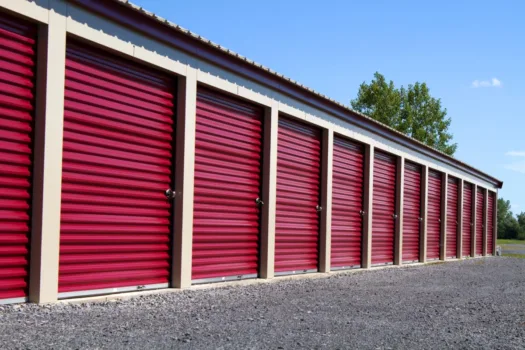
Renting a storage unit usually happens under pressure. You’re moving, you’re clearing floor space so a wheelchair can turn around in a bedroom, or you’re waiting out a renovation with half a household in boxes. So you compare prices online, reserve a unit, pay the first month, and find out on move-in day whether the place actually works for your body.
That order of operations fails a lot of us. A 10 by 10 unit at the end of a gravel drive with a latch at ankle height is technically a storage unit and functionally a locked box. The good news is that almost everything determining whether a facility is usable can be confirmed before you pay, with one phone call and one visit.
Storage does different work when your housing options are limited
For a lot of disabled renters, the search for wheelchair accessible housing ends in a compromise. You take the place with the step-free entrance, or the one where the bathroom door is wide enough, and something else gets traded away. Square footage is usually first to go.
So off-site storage ends up doing structural work in the household. It buys back the floor space that makes a shower chair, a hospital bed, and an actual turning radius possible. More than 1 in 4 U.S. adults have a disability, and 12.2 percent report a mobility disability involving walking or stairs, which is a lot of people whose stuff includes backup mobility equipment, supplies bought in bulk, and the furniture that stopped fitting after the last move.
The general checklist still applies, and two items on it carry more weight
Everything the standard storage advice tells every renter is still true for you. Gate hours, camera coverage, pest control, climate control for anything that warps, lease terms, insurance options, and pricing you can get itemized in writing. Skipping that vetting because you’re focused on access questions just gets you a poorly run unit you can’t reach.
Two items on that list matter more than the general guides let on. Storage advice tends to file the distance between parking and loading areas and the availability of dollies and carts under convenience, somewhere alongside staff friendliness and tidy grounds. For anyone with a mobility condition or a limited energy budget, those two variables often decide whether a unit is usable at all. Forty feet versus four hundred feet is the difference between one trip and a flare that costs you the rest of the week.
What the ADA requires, and where the requirement stops
Self-storage picked up its own scoping rule in the 2010 ADA Standards, and the numbers are lower than most people assume. Under the scoping rule for self-service storage facilities, a location with 200 spaces or fewer must make 5 percent of them accessible, with a floor of one unit. Above 200 spaces, the requirement is 10 units plus 2 percent of everything over 200. A 400-unit facility owes you 14 accessible units.
Those units must be spread across the different classes of space, so a facility can’t park all its accessible units in the smallest size and call it done. The same rule then says accessible spaces don’t have to be dispersed among buildings in a multi-building facility. Every accessible unit on a six-building site can legally sit in the building farthest from the gate.
That scoping applies to facilities built or altered on or after March 15, 2012. Older sites operate under Title III’s ongoing duty of readily achievable barrier removal in existing facilities, which the Justice Department defines as changes that are easily accomplishable without much difficulty or expense, weighed against the size and resources of the business. The examples DOJ gives include building an accessible route from the parking lot to the entrance, widening a doorway, and installing accessible door hardware. It’s a real obligation, and it’s also case by case, which means you can’t verify it from a booking page. Ask. The answer varies location by location even inside one national brand.
Trace the route from the parking space to the unit door
Accessible parking near the rental office tells you nothing about parking near your unit. Ask where the accessible spaces sit relative to the specific unit they want to rent you. Under the standards, a van space runs 132 inches wide, or 96 inches wide when it has a 96-inch access aisle beside it, and the access aisle has to connect to an accessible route.
Then ask about the surface. Drive aisles get patched rather than repaved, and gravel, broken asphalt, speed bumps, and a curb with no cut will stop a wheelchair or a walker cold even when the unit itself is fine. Ask whether the route from the accessible space to the door crosses any of that.
For interior units, the questions shift. Doorways on an accessible route need a clear width of at least 32 inches, which rules out some older interior unit doors. Ask how wide the corridors are, whether carts get left in them, where the elevator is, and what the policy is when the elevator goes down while your things are on the second floor. If you can’t get there in person, ask staff to record a video walk from the accessible parking space to the actual unit door. Plenty of managers will do it.
Test the door, the latch, and the lock before you sign
Door hardware on an accessible route has to work with one hand, without tight grasping, pinching, or twisting of the wrist, at 5 pounds of force or less, with operable parts mounted between 34 and 48 inches above the ground. Roll-up doors are where this falls apart most often. Many need a two-handed pull on a strap, and the standards carry an exception that lets existing overhead rolling doors keep locks that activate only at the top or bottom rail. That exception explains why so many storage latches sit near the floor.
Storage elements in accessible units also have to land within reach ranges of 15 to 48 inches. Shelving you install yourself is your call, but anything fixed should fall in that band.
Insist on operating the actual door on the actual unit before you sign, not a demo unit by the office. Bring the padlock you already know you can work, and check that it fits the hasp. While you’re there, try the gate keypad from the driver’s seat. A keypad set back from the lane or mounted high on a post can turn every visit into a transfer in and out of the car.
Hours, staff, and what happens when something breaks
Gate access hours and office hours are two different numbers, and facilities quote the first one in their advertising. Round-the-clock gate access doesn’t help much if you occasionally need a person to move a cart or reset a code, so ask which hours actually have staff on site.
Ask who clears snow and ice from the drive aisles and how quickly, whether carts stay in the corridors or get locked up overnight, and how lighting works after dark. If a friend or a paid helper does your lifting, ask how many gate codes come with the rental and whether you can authorize another person on the account without being present.
When storage is part of moving out of state with a disability, the sequence gets harder. You often sign the lease before you’ve seen the property. The questions don’t change, but you’ll be asking them by phone, and you’ll want the answers documented.
Get the answers in writing before you pay
Reserve a specific unit number rather than a unit type. “Ground floor, drive-up” is a category, and unit 118 is a commitment. Send the manager a short email listing what you were told: the unit number, the door type, the distance from accessible parking, the access hours. Ask them to confirm by reply. Use that email as your reference if you show up and the unit has been swapped.
Ask about the transfer policy in the same message. If the door turns out to be unusable, you want to know in advance whether moving to a different unit costs you a fee or a new lease term.
If a facility tells you it has no accessible units and no interest in discussing it, filing an ADA complaint with DOJ is available to you, and the facility’s obligations don’t disappear because a manager says they do. Most of the time it doesn’t come to that. The person who can tell you the latch height on unit 118 usually just needs someone to ask.

Follow me down the rabbit hole!
I'm Alice and I live with a dizzying assortment of invisible disabilities, including ADHD and fibromyalgia. I write to raise awareness and end the stigma surrounding mental and chronic illnesses of all kinds.