 Alice Turing
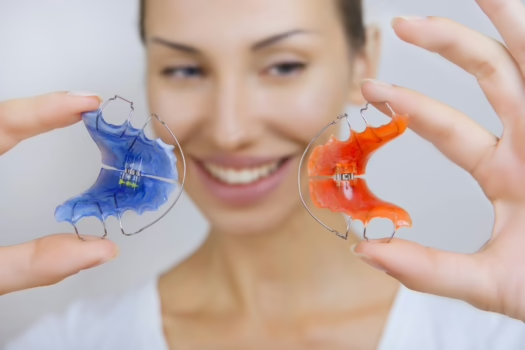
You spent months or even years with braces or aligners to get your perfect smile. After all that work, your orthodontist gave you a retainer to keep your teeth in place. However, many people stop using their retainers once treatment ends.
If you stop using your retainer, your teeth will start to shift back toward their original positions. This happens because the bone and tissue around your teeth need time to stabilize in their new spots. Without your retainer, the natural tendency for teeth to move can undo your orthodontic results.
This article explains what happens to your teeth after you stop wearing a retainer. You’ll learn about tooth movement, orthodontic relapse, and what to do if your retainer feels tight or no longer fits properly.
Teeth can quickly shift out of alignment without the use of a retainer
Your teeth can start to move within just a few weeks after you stop using your retainer. The first few months after orthodontic treatment represent the most vulnerable period for tooth movement. During this time, the bone and tissues around your teeth need time to stabilize in their new positions.
Orthodontists at Freeman Orthodontics stress the importance of consistent retainer use for this exact reason. Small gaps, crowding, or misalignment can return if you skip your retainer for too long. Some patients notice changes in as little as a month.
The amount of time you go without your retainer directly affects how much your teeth will shift. A few days might cause minimal movement that your retainer can still correct. However, several months without wear can lead to noticeable changes. In severe cases, you may need additional orthodontic treatment to restore your smile to its proper alignment.
Stopping retainer wear increases the risk of orthodontic relapse
Your teeth have a natural tendency to shift back to their original positions after braces come off. This process is called orthodontic relapse. Retainers hold your teeth in their new, corrected spots while the bone and gums around them strengthen and adapt.
If you stop the use of your retainer too soon, your teeth will start to move. Sometimes this shift happens quickly. You may notice gaps open up between your front teeth again. Crowded teeth can return to their previous positions.
Rotated teeth that were straightened during treatment can twist back. Lower front teeth are especially prone to crowding together again. These changes undo the results you worked hard to achieve.
The risk of relapse stays with you for years after treatment ends. However, consistent retainer use protects your smile and prevents your teeth from drifting out of place.
Retainers that feel tight indicate tooth movement has occurred
A tight retainer is a clear sign that your teeth have shifted from their correct positions. Even a short break from wearing your retainer can allow your teeth to move slightly. This movement happens because your teeth are not permanently fixed in place after orthodontic treatment.
If you skip your retainer for just a week, you may notice it feels snug or tight once you put it back in. The pressure you feel shows that your teeth have moved, and the retainer is trying to guide them back. However, the tightness should be mild and not painful.
If your retainer feels very tight or causes sharp pain, your teeth may have shifted too much. In this case, your old retainer might not fit properly anymore. You should see your orthodontist to check if you need a new retainer or other treatment to fix the problem.
Long gaps without wearing retainers may require orthodontic retreatment
If you skip your retainer for an extended period, your teeth can shift back toward their original positions. The longer you go without it, the more movement occurs. In some cases, the changes become so significant that your retainer no longer fits properly.
At this point, you may need to see an orthodontist for an assessment. They will check how much your teeth have moved and discuss your options. Minor shifts might allow you to resume retainer use with some adjustments.
However, major shifts often require retreatment. This could mean braces or clear aligners all over again. The process takes time and costs money, which makes it worth avoiding in the first place.
Your orthodontist can create a personalized plan to restore your smile. The sooner you address the problem, the easier it is to fix. Therefore, regular retainer use protects your investment and saves you from repeating treatment.
Wearing retainers consistently preserves your post-braces smile
Your teeth have a natural tendency to shift back to their original positions after braces come off. This happens because the bone and tissue around your teeth need time to adjust to their new locations. Therefore, you must wear your retainer as your orthodontist directs.
The first few months after braces removal are the most important time for retainer use. During this period, your teeth are most likely to move. Most orthodontists recommend full-time wear at first, then gradually reduce the schedule to nighttime only.
However, the need for retainers doesn’t stop after a few months. You should plan to wear your retainer at least a few nights each week for the rest of your life. This continued use protects the investment you made in your smile and keeps your teeth aligned properly.
Your retainer acts as a safeguard for all the progress you have achieved with braces. Consistent wear prevents your teeth from drifting and maintains the straight smile you worked hard to get.
Conclusion
Your retainer plays a major role in the success of your orthodontic treatment. If you stop wearing it, your teeth will shift back to their original positions over time. This happens because teeth naturally move throughout your life, and the retainer holds them in place.
The best way to protect your new smile is to wear your retainer as directed by your orthodontist. Even years after treatment, consistent use prevents unwanted tooth movement and keeps your teeth straight. Remember to store it properly, clean it regularly, and schedule checkups to make sure it still fits correctly.

Follow me down the rabbit hole!
I'm Alice and I live with a dizzying assortment of invisible disabilities, including ADHD and fibromyalgia. I write to raise awareness and end the stigma surrounding mental and chronic illnesses of all kinds.