 Alice Turing
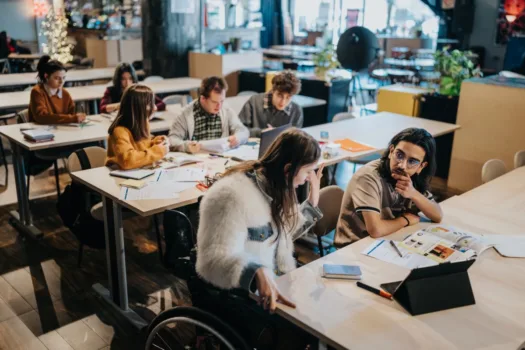
A fixed schedule of learning might seem to be an unbiased approach since everyone follows the same regulations. However, the same schedule can mean completely different things for each particular student.
For example, a student struggling with chronic pain may have difficulty attending a morning lecture; a student with ADHD may require shorter intervals to complete tasks; a student using assistive technologies may need additional time to read or format assignments.
Flexible learning allows you to have multiple options for accessing lessons, completing homework and presenting your understanding of the material. Flexible learning could include recordings of lectures, accessibility of materials, extra deadlines, alternative forms of assessment, flexible attendance, or alternative modes of learning.
Flexibility Will Help You to Cope With Unpredictable Symptoms
Some disabilities impact a student consistently. On the other hand, there are others that can vary from day to day. The symptoms of fatigue, pain, migraines, anxiety, difficulties concentrating, and even side effects of medications can manifest themselves unexpectedly.
A rigid attendance policy will penalize you for an issue that you cannot control medically. Flexible attendance policies will enable you to view recorded lectures, perform alternative assignments, or even attend classes remotely if such an option exists.
It does not exempt you from communication obligations. In fact, you still need to abide by the established procedure, contact the relevant individual, and complete missed assignments when you can. The difference is that you will not be penalized for one hard day.
In addition, you might have to juggle appointments, requests for accommodations, treatment, classwork, and extensive research projects. Some students may decide to seek write my APA format paper for me assistance during a challenging time so that they can concentrate on their health issues. Of course, academic help should always be sought in a reasonable and school policy-compliant manner.
The True Meaning of Flexible Learning
Flexible learning does not imply that there are no deadlines or criteria set for the classes. Rather, flexible learning implies the ability of a class to adapt to various needs without compromising the objective.
For instance, let us assume that the objective of the assignment is to demonstrate an understanding of climate change. While a written assignment would suit most of the students, a student with dysgraphia would be able to prove their understanding through an audio assignment that is accepted.
Flexible learning can encompass:
- Recorded lessons accompanied by captions and transcripts
- Digital resources compatible with screen readers
- Extended time for exams or any timed assignments
- Breaks during long lessons or examinations
- Flexible attendance for disability purposes
- The option of choosing between a quiet and distraction-free environment
- Instructions offered in multiple ways
- Alternate ways of completing assignments where applicable
- Early access to the reading list and other materials
You may require only one of these accommodations. Another student might require all of these. Disabilities have varying impacts on people, so support needs to be tailored accordingly to address specific barriers.
Accessible Resources Save Your Time and Efforts
A class may have wonderful material – but it can be challenging to access. The scanned pages may not be readable by a screen reader. The video may lack captions, excluding a student who is either deaf or hard of hearing. Small fonts and a poor contrast ratio will make studying challenging for students with low vision.
Accessible resources let you concentrate on learning without having to spend hours opening, converting, or analyzing the content of your lessons. Some assistance that teachers can give is the provision of properly formatted documents, video captioning, and headings.
Preparation of access should happen before a student raises an issue. This could prevent unnecessary delays and would benefit many more students, including those without a reported disability.
According to Mariam Navrozashvili, an expert in the field of education and connected with the essay writing service EssayPro, successful planning begins with pinpointing the exact obstacle. Requesting “more flexibility” is not as helpful as explaining why a student requires closed captions, a quiet room, or a disability-related absence procedure.
Flexible Assessments Can Prove What You Really Know
Traditional examinations suit some students perfectly. For other students, they might be problematic, especially when there are problems with speed, writing, remembering, movement, seeing, hearing, and concentration owing to a disability.
The adjustment might include extra time, assistive technology, a reader, a scribe, rest periods, or a quiet environment. In the appropriate course, the teacher might also employ a project, a presentation, an oral exam or a portfolio.
The central question here should be: What skill should be assessed?
Colleges Have Their Obligations, but Students Need to Come Forward
Postsecondary educational institutions in the United States will not typically identify students in need of disability accommodation, as schools might prior to college. You will have to bring yourself forward, follow their procedure, and ask for appropriate accommodations.
The U.S. Department of Education’s guidance regarding students with disabilities going to postsecondary education institutions clarifies the responsibility of postsecondary educational institutions to provide adjustments to ensure no disability discrimination. It also clarifies that it is the obligation of the student to inform the school and follow its process.
Procedures and documentation requirements vary from country to country and from institution to institution. Contact your disability/accessibility office early on to find out the required documents and timelines.
How to Request Flexible Accommodations
Asking for help can be hard, particularly if you fear others may question your requests. The following steps might help you have a successful conversation:
- Seek out the right office. Find the department of disability services, accessibility services, or student support.
- See what the requirements are. Read about the needed forms, medical reports, or other paperwork.
- Describe the barrier. Explain what happens during a class, exam, or assignment, without giving any unnecessary personal information.
- Ask for particular assistance. For example, ask for captions, exam breaks, accessible documents, flexible attendance, or some other accommodation related to the barrier.
- Maintain records. Keep all letters of approval, email exchanges, deadlines, and names of those you talk to.
- Contact the instructor ahead of time. Talk about how accommodations should be used before there is a problem.
- Reassess the plan. Contact the accessibility office if the accommodation does not work or if your needs have changed.
There is no need to apologize for requesting the same opportunity to learn and succeed as anyone else.
Concluding Words
Flexible learning is important since disability-related obstacles are not experienced the same way by all students. A single inflexible approach can mask the student’s true capability and transform access challenges into academic failure.
An effective combination includes school policy and proactive student communication. Seek help before a small obstacle escalates into a major problem. Your education should inspire you to learn and develop, not fight against avoidable roadblocks every day.

Follow me down the rabbit hole!
I'm Alice and I live with a dizzying assortment of invisible disabilities, including ADHD and fibromyalgia. I write to raise awareness and end the stigma surrounding mental and chronic illnesses of all kinds.